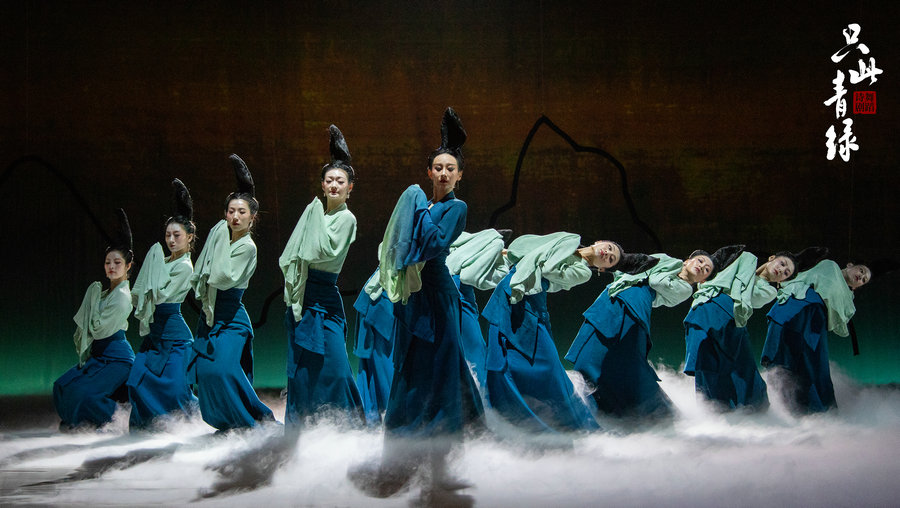
Poetic Dance: The Journey of A Legendary Landscape Painting
Introduction
"Poetic Dance: The Journey of A Legendary Landscape Painting" is a Chinese dance drama presented by the China Oriental Performing Arts Group. This widely acclaimed production is inspired by the iconic painting "A Panorama of Rivers and Mountains" by artist Wang Ximeng, created during the Song Dynasty (960-1279). The dance drama, choreographed by the talented duo Han Zhen and Zhou Liya, pays homage to one of the most significant works in Chinese fine art history, renowned for its intricate depiction of life's intricacies and natural landscapes. Since its premiere in 2021, the dance drama has captivated audiences around the world, earning accolades for its artistic excellence and cultural significance.
Historical Context
Origins of the Painting
"A Panorama of Rivers and Mountains", the masterpiece that inspired this dance drama, was painted by Wang Ximeng at the age of 18 during the Song Dynasty. Measuring an impressive 11 meters in length, this scroll painting vividly captures the natural scenery and daily lives of people during that era, blending realism with artistic imagination. It features a harmonious depiction of mountains, rivers, villages, and other elements of nature, which are brought to life with exquisite detail. Despite being nearly a millennium old, it remains one of the most important contributions to the history of Chinese fine art, its artistic value timeless.
Cultural Significance
The painting is housed in the Palace Museum in Beijing. Its cultural significance lies not only in its artistic brilliance but also in its encapsulation of an era's aesthetics and lifestyles. The painting is revered as a cultural treasure, reflecting the Song Dynasty's advancements in art and culture. It serves as an artistic bridge connecting the past to the present, allowing contemporary audiences to appreciate the grandeur of historical Chinese artistry.
Analysis of the Painting
The painting is rich in symbolism, with mountains and rivers representing natural majesty and tranquility. The convergence of these elements symbolizes harmony between nature and humanity, a core tenet of Chinese philosophy. Through its depiction of villages, ports and temples, the painting encapsulates the interconnectedness of life, illustrating themes of unity and coexistence. Each element within the painting serves not only as a representation of physical landscapes but also as a metaphor for the balance and rhythm of life during the Song Dynasty.
Influence and Legacy
Impact on Art and Culture
"Poetic Dance: The Journey of A Legendary Landscape Painting" has left a profound impact on both the artistic and cultural landscapes. By interpreting Wang Ximeng's painting through dance, the production has brought renewed attention and appreciation to traditional Chinese art forms. It serves as a testament to the enduring influence of historical art, demonstrating its ability to inspire modern creative expressions. The dance drama has also played a pivotal role in promoting cultural exchange, introducing global audiences to the richness of Chinese artistic heritage.
Exhibitions and Collections
The original painting, "A Panorama of Rivers and Mountains", is a cherished part of the Palace Museum's permanent collection. The dance drama, inspired by this masterpiece, has toured extensively both in China and internationally, further expanding its reach and influence. Performances have been held in numerous regions, including Beijing, Singapore and Istanbul, with plans to continue its global journey to share the cultural legacy of the painting and its dance interpretation with an even wider audience.








